Planetary Gearbox Selection Guide
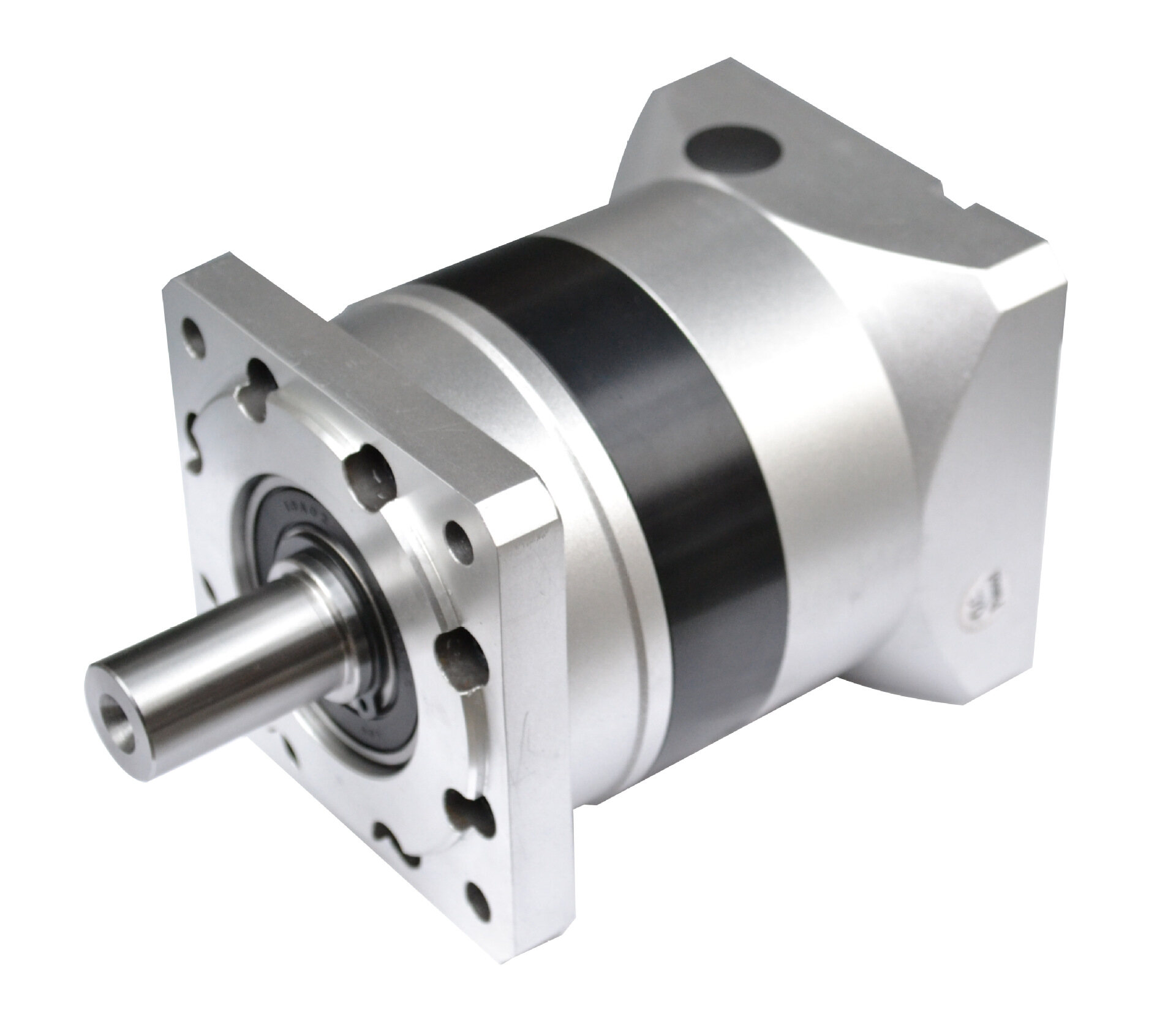
Select the Right Planetary Gearbox for Your Application: Precision Engineering, Tailored to Your Needs
In industrial automation and precision manufacturing, planetary gear reducers are essential transmission components. Comprising a sun gear, planet gears, an internal ring gear, and a planet carrier, they convert high-speed motor rotation into low-speed, high-torque output through gear meshing. However, with the vast array of models and specifications available on the market, selecting the most suitable planetary reducer for specific operating conditions remains a significant challenge for engineers and equipment buyers. Improper selection can lead to performance issues such as sluggish operation and reduced efficiency, or even severe consequences like gear wear, motor overload, and complete system failure. This guide breaks down the key factors for selecting the right planetary reducer.
Step 1: Understand Your Operating Conditions – The Starting Point for Selection
The first step in selection isn't sampling; it's thoroughly analyzing the equipment's operating conditions. Ask yourself: Does the equipment run continuously at a constant speed, or does it frequently start/stop and reverse? Is the load stable or subject to shocks? Is the installation space tight? Are there dust, moisture, or corrosive substances in the environment? These foundational questions determine all subsequent parameter choices. For example, robotic joints require high precision, fast response, and high torque density, whereas mining machinery prioritizes load capacity and durability—their selection logic differs significantly.
Step 2: Torque Matching — The Foundation of Selection
Torque is the core criterion for selecting a planetary gearbox. When selecting, you must consider both **rated torque** and **peak torque**. Rated torque is the maximum torque the gearbox can sustain during long-term stable operation, while peak torque corresponds to instantaneous loads during startup, braking, or impact. For equipment with frequent start-stop cycles, starting torque can reach 2 to 3 times the rated torque. Selecting based solely on rated torque often leads to gear tooth breakage or bearing failure.
A safety factor of 1.2 to 1.5 times the calculated load torque is generally recommended. For heavy machinery subject to frequent shock loads, increase the safety factor to 1.5 to 2.0. Additionally, ensure the selected reducer's rated output torque exceeds the product of the load torque and the safety factor.
Step 3: Speed and Gear Ratio — Find the Optimal Transmission Ratio
The reduction ratio defines the proportion between input and output speeds. The calculation is straightforward: Reduction Ratio = Motor Input Speed ÷ Required Equipment Output Speed. However, when selecting a unit, remember that a higher ratio isn't always better. Excessively high ratios can result in output speeds that are too low, potentially causing motor overheating or reduced efficiency. Additionally, increasing the number of stages amplifies backlash, compromising positioning accuracy. Large reduction ratios (e.g., 50 to 100) suit low-speed, heavy-load applications, while medium-speed precision scenarios typically require ratios between 10 and 50. Furthermore, each additional stage reduces efficiency by approximately 1% to 3%; ensure sufficient power headroom when designing multi-stage reductions.
Step 4: Accuracy Level — How much should you spend on accuracy?
Backlash is a core metric for measuring the transmission accuracy of gearboxes. In applications requiring high positioning precision, such as CNC machines and robot joints, select models with backlash below 5 arcminutes. For general material handling or mixing equipment, a backlash range of 10 to 15 arcminutes is sufficient. Blindly pursuing lower backlash significantly increases costs, while insufficient precision can lead to reduced product yield. Ultimately, selecting the right precision level involves balancing performance against cost.
Step 5: Structure and Installation Method — Space Determines Choice
Planetary gear reducers come in single-stage, double-stage, and multi-stage configurations. Single-stage units feature a compact design ideal for low-power applications with low reduction ratios. Multi-stage models deliver higher reduction ratios and greater torque output but are larger and more costly. When installation space is limited, right-angle gear reducers can be selected to redirect torque transmission by 90 degrees. Lubrication methods should also match operating conditions: oil immersion offers superior heat dissipation and load capacity for heavy-duty applications, while grease lubrication provides better sealing and longer maintenance intervals, making it suitable for light-to-medium loads or environments requiring high cleanliness.
Step 6: Environmental Factors – Don't Let External Conditions Compromise Your Selection
Ambient temperature and protection requirements are often overlooked but directly impact reducer lifespan. High-temperature environments require heat-resistant lubricants and specialized sealing structures. Dusty or humid conditions demand appropriate IP ratings, while explosion-proof, vacuum, or non-magnetic environments necessitate specially designed reducers. If ambient temperatures are high without forced cooling, thermal power rating must be verified; derating may be required if necessary.
Selection is a comprehensive trade-off.
There is no "standard answer" for selecting planetary gearboxes—only the "optimal solution." Selection requires balancing torque, speed, accuracy, space, operating environment, and cost. The right choice not only boosts the efficiency and reliability of the entire transmission system but also helps companies significantly reduce operational expenses. Next time you face a selection task, follow these steps: understand the operating conditions, calculate torque accurately, choose the correct gear ratio, match precision requirements, account for spatial constraints, and evaluate environmental factors. While this method may not guarantee the absolute best gearbox, it will help you avoid most common selection pitfalls.